Behind the Headset: What It Actually Takes to Lead an Elite RPG Raid Team
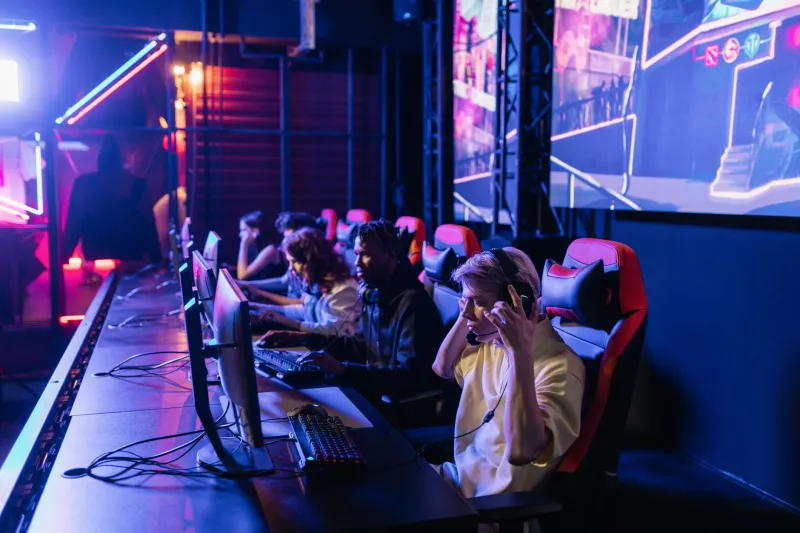
It's 11:47 PM on a Tuesday. The tank just disconnected. The healer pulled aggro on the wrong mob. Three DPS players are arguing in Discord about who messed up the rotation. And somewhere in the middle of all that noise, one person is staying completely calm — calling adjustments, redistributing roles on the fly, and keeping 23 other people from rage-quitting before the night's main event even begins.
That person is the raid leader. And if you've never done the job, you probably have no idea how brutal it actually is.
We talked to veteran raid commanders across several of the most popular fantasy MMOs — players who've been leading organized groups for anywhere from three to twelve years — to understand what separates the leaders people will follow into a wipe-fest from the ones whose rosters quietly fall apart after two bad sessions.
The answers were more nuanced — and more human — than we expected.
Authority Without a Title
Here's the thing about raid leadership that most players don't realize until they try it: nobody has to listen to you. There's no HR department. No performance review. No contract. The players on your roster can log off, join another guild, or simply stop showing up. Your authority is entirely voluntary, renewed every single session by the people who choose to follow your calls.
"The moment you start acting like you're owed respect, you've already lost half the room," says Marcus, a 34-year-old from Ohio who has led endgame raids in multiple fantasy MMOs since 2013. "People follow you because they trust that you know what you're doing and that you actually care about the team — not because your name is highlighted in the guild roster."
That distinction — earned credibility versus assumed authority — came up in nearly every conversation we had. The most effective raid leaders treat their role less like a military commander and more like a head coach who also happens to be on the field. They're visible, they're accountable, and they're the first to admit when a strategy isn't working.
The Ego Management Problem
Every raid team is a collection of personalities. You've got the veteran who's been clearing this content since launch and isn't shy about reminding everyone. The newer player who overperforms and starts questioning why they're not calling shots. The quiet contributor who carries the team on the meters but disappears the moment conflict shows up. And, inevitably, the person who has opinions about everything and the volume to match.
Managing those dynamics — especially across time zones, where a player in Seattle and a player in Miami might have very different ideas about what "late night" means — is where most raid leaders either find their rhythm or burn out completely.
Diana, a 29-year-old from Texas who leads a 30-person progression team, describes her approach as "radical transparency with firm limits." She maintains a clear set of expectations posted in her guild's Discord server, covers everything from attendance to loot distribution to how disputes get handled, and revisits those expectations whenever the roster changes significantly.
"The drama almost always comes from ambiguity," she says. "When people don't know what the rules are, they invent their own. And their version of the rules usually puts them at the center."
Her solution is to over-communicate expectations before conflict arises, then enforce them consistently. The consistency part, she notes, is what most leaders skip. "You can't go easy on your friend and hard on someone you don't know as well. People notice. They always notice."
Reading the Room at Midnight
Raid nights often run late. Really late. And the psychological state of a 25-person team at 12:30 AM after three consecutive wipes is very different from what it was at 9 PM when everyone logged in fresh.
The best raid leaders develop a kind of emotional radar — an ability to read collective energy and adjust their approach in real time. Some nights that means calling a five-minute break before things get toxic. Other nights it means cracking a joke to deflate tension. And sometimes it means making the hard call to end the session early, even when you're close, because pushing further will cost you three players by next week.
"You have to know when to push and when to back off," says James, a 41-year-old from Georgia who has led endgame content across multiple game titles over more than a decade. "And honestly, knowing when to back off is the harder skill. Nobody wants to be the person who called it early. But the leaders who always push until the team breaks are the ones who don't have teams anymore."
James keeps a loose mental model of each player's "patience threshold" — how many wipes they can absorb before frustration starts affecting their play. He adjusts his communication style accordingly, offering more encouragement to players he knows are close to their limit while giving more technical feedback to those who are still locked in.
The Accountability Loop
One of the most consistent themes among successful raid leaders was their approach to accountability — specifically, how they handle mistakes without making people feel attacked.
Public callouts are a trap. Humiliating someone in front of 20 other players might feel satisfying in the moment, but it poisons the team culture and guarantees that person either shuts down or becomes a source of ongoing friction. The leaders who last learn to separate the mistake from the person and address performance issues privately whenever possible.
But accountability also can't be avoided entirely. If the same player makes the same mistake three raids in a row and nothing is said, the rest of the team notices — and starts wondering if standards actually apply to everyone.
"You have to close the loop," Diana explains. "If something went wrong, the team needs to know you saw it and that it's being handled. They don't need details. They just need to know you're not ignoring it."
The best leaders create what amounts to a culture of shared ownership — where mistakes are treated as team learning moments rather than individual failures, but where individual accountability is still clearly maintained behind the scenes.
What Actually Keeps Teams Together
For all the strategy and communication tactics, the raid leaders we spoke with kept returning to something simpler when we asked what actually holds a team together across months and years: people have to genuinely want to be there.
That sounds obvious. But building an environment where people want to show up — not just because the content is good, but because the people are good — is harder than optimizing any rotation or execution strategy. It requires consistent investment in relationships, not just results.
Marcus puts it bluntly: "I've seen teams with perfect execution fall apart because nobody actually liked each other. And I've seen teams that wiped constantly stay together for years because the vibe was right. The raids that last are the ones where people would hang out even if there was no game."
That's the part that doesn't show up in any guide. The raid leader's real job isn't just calling positioning or managing cooldowns. It's building something worth coming back to — night after night, wipe after wipe, timezone difference after timezone difference.
The shadow is always there. The question is whether you've built a team that knows how to rise through it together.