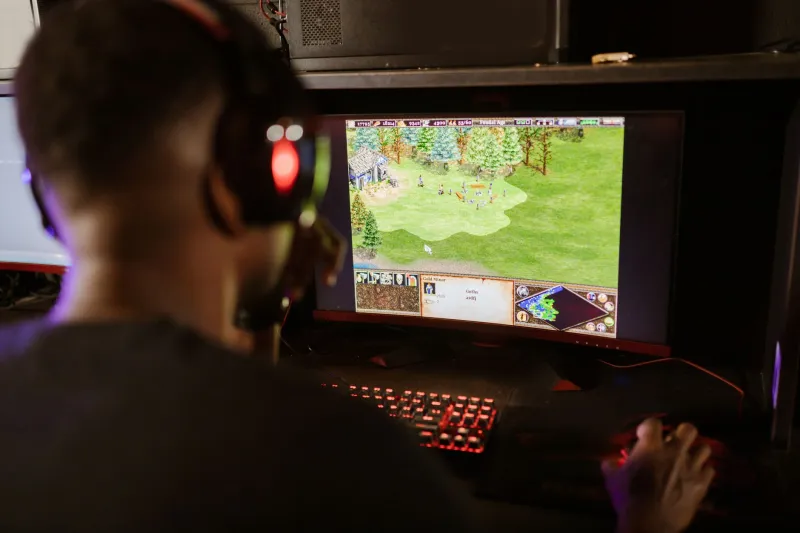
Nobody Knows My Name: Inside the World of RPG Players Who Choose to Disappear
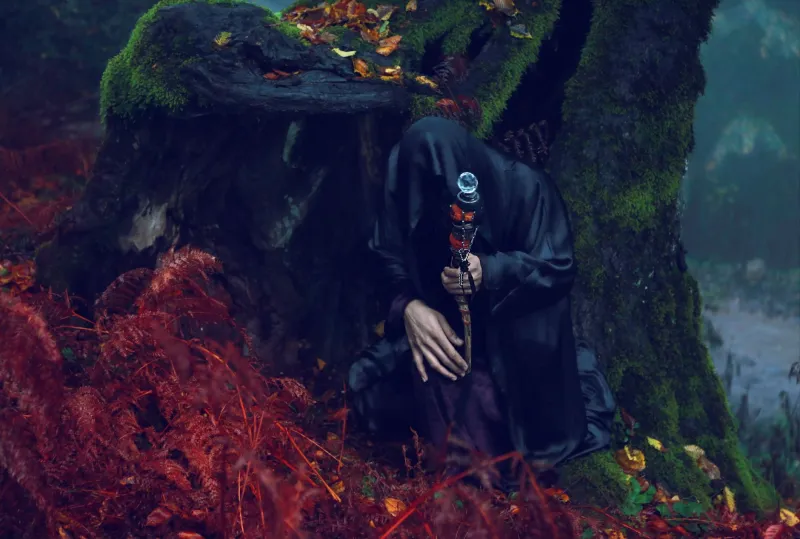
There's a merchant on a mid-tier fantasy server who has single-handedly controlled the in-game economy for three years. He's manipulated material prices, quietly funded at least four major guilds, and — according to players who've tried to track him down — has never once appeared on a public leaderboard, participated in a server event, or used the same character name twice in the same region.
Almost nobody knows who he is. That's entirely the point.
Welcome to what some players are calling the "Ghost Class" — not an official build, not a game mechanic, but a deliberate philosophy adopted by a surprisingly large number of online RPG players who've decided that the best power move is the one nobody sees coming.
The Anti-Fame Framework
In most online RPGs, progress is loud. You hit a milestone, the server announces it. You clear a dungeon first, your name gets etched into some in-game hall of fame. You build a dominant guild, everyone knows your tag. The entire reward loop is engineered around visibility — you're supposed to want recognition.
But for a growing subset of players, that visibility is exactly what they're running from.
"The moment people know your name, you become a target," says Marcus, a 34-year-old from Austin who has played a rotating cast of anonymous characters across multiple fantasy MMOs for nearly a decade. "I've had high-profile accounts before. You spend half your time managing reputation instead of actually playing. Going invisible was the best decision I ever made in any game."
This isn't about being antisocial or disengaged. Ghost Class players — as they call themselves in a few niche Discord communities — are often among the most engaged players on a server. They're just engaged in ways that don't generate headlines.
Architects of the Unseen
The roles these players tend to occupy fall into a few distinct archetypes.
The Silent Trader is probably the most common. These are players who've mastered in-game economies — buying low, selling high, cornering markets on rare crafting components — without ever flashing their wealth or drawing attention to their methods. They operate through intermediaries, alt accounts, and carefully timed transactions that leave no obvious fingerprints.
The Background Builder is the player who quietly constructs infrastructure that entire guilds rely on — crafting networks, supply chains, scouted maps of enemy territory — but never takes credit for it. They're the reason a raid goes smoothly. Nobody at the victory celebration knows their name.
The Anonymous Power Broker is rarer and more calculated. This player influences server politics, brokers alliances between rival factions, and occasionally engineers the downfall of dominant guilds — all without ever sitting at the table themselves. Think of them as the political consultants of the RPG world.
"I've ended three guilds," says a player who goes by a different name every few months and agreed to speak only under the condition we not describe her character class or server. "Not through combat. Through information. I know who's fighting with who, who's about to quit, which officers are loyal and which ones aren't. I whisper the right thing to the right person and then I watch. Nobody ever traces it back to me. That's the whole game."
The Psychology of Chosen Invisibility
So what drives someone to deliberately opt out of the recognition systems that most games are built around?
Several players we spoke with pointed to a sense of control that fame actively undermines. When you're known, other people's perceptions of you start to dictate how you play. You feel pressure to maintain a reputation, to show up for events, to perform. Anonymity strips all of that away and leaves you with something purer — just you and the game mechanics, no audience required.
There's also something deeper going on around identity. For some players, the Ghost Class approach is a direct reaction to how exhausting visibility has become in real life. Social media, personal branding, the constant pressure to curate a public self — disappearing into a game world without leaving a footprint feels like a genuine relief.
"In real life, everything I do has an audience," says Jordan, a 28-year-old content creator from Chicago who plays RPGs specifically as an escape from the attention economy. "The one place I don't want to perform is a game. I want to just exist in there. Quietly. On my own terms."
Psychologists who study gaming behavior have noted that intrinsic motivation — doing something for the internal satisfaction of it rather than external reward — tends to produce deeper, more durable engagement. Ghost Class players seem to have figured that out instinctively. They've removed the external validation loop entirely and replaced it with something more personal: the satisfaction of knowing what they did, even if nobody else does.
The Hidden Influence Problem
Of course, not everyone in the RPG community views the Ghost Class with admiration. Critics — and there are some — argue that anonymous power brokers create a kind of unaccountable influence that can quietly corrode server culture.
"If you're shaping how an entire economy works, or steering guild politics from the shadows, you're affecting real people's experiences without any transparency," says one guild leader who's suspected Ghost Class interference in his server's politics more than once. "At least when someone's operating in the open, you can push back. When it's invisible, you don't even know what you're fighting."
It's a fair point, and Ghost Class players don't always dismiss it. Some draw their own ethical lines — influencing economies but not engineering social conflicts, for example, or limiting their anonymous activity to single-player adjacent modes. Others are more comfortable operating without limits.
"Every powerful player shapes the server," counters Marcus. "The difference is I'm honest about the fact that I'm doing it for myself, not for a legacy."
What No Trace Actually Means
Here's the irony at the center of the Ghost Class philosophy: the players who are best at leaving no trace are often the ones who've left the deepest marks.
That anonymous merchant's price manipulations reshaped how an entire server traded rare materials for years. The background builder's supply chains outlasted the guilds they served. The power broker's whispers echoed through server politics long after she'd moved on to a new character.
Ghost Class players don't appear on leaderboards. Their names don't get shouted in chat. No one raises a toast to them after a successful raid. But the servers they inhabit are quietly, fundamentally shaped by what they've done.
And somewhere, on a character nobody recognizes, with a name they'll change next month, they know it.
For them, that's more than enough.