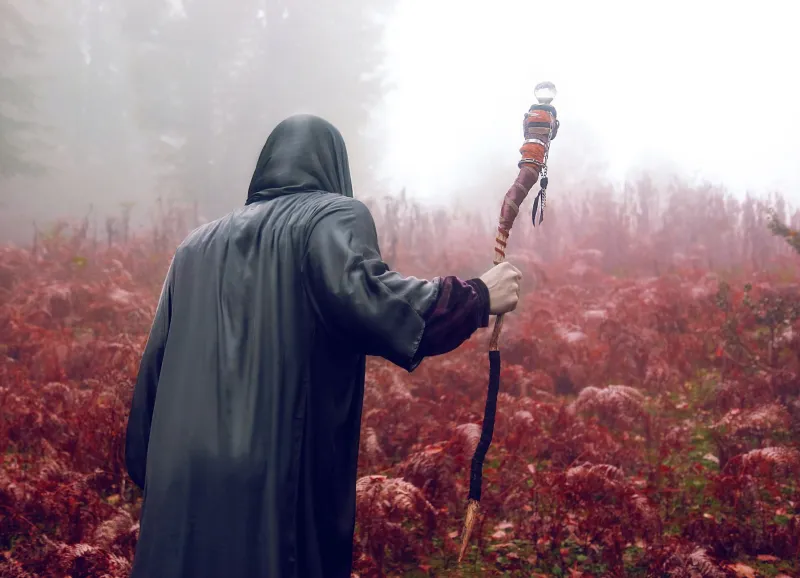
Chasing Ghosts: The Real Cost of RNG and What It's Doing to Players

Photo by Photo by Fazly Shah on Unsplash on Unsplash
The drop rate listed in the database is 0.8%. You've run the dungeon 140 times. You know the math doesn't care about your streak. You know each run is independent, that the game has no memory of your suffering. You run it again anyway.
If you've spent serious time in an online RPG, you know this feeling. Maybe you've lived it. And if you're honest, you know that at a certain point, it stopped being fun.
The Promise and the Trap
Randomized loot is one of the oldest and most effective tools in the online RPG designer's toolkit. The unpredictability creates excitement. The rare drop feels genuinely special precisely because it isn't guaranteed. When the system works as intended, it creates some of the most memorable moments in gaming — the legendary weapon that drops on your first run, the mount you've wanted for months that finally appears after a long grind.
But the same mechanism that generates those highs is also, by design, engineered to keep you playing. Variable reward schedules — intermittent reinforcement, in psychology terms — are among the most powerful behavioral drivers known to researchers. They're the same principle that makes slot machines so difficult to walk away from.
Game designers know this. They've always known this. The question that's becoming harder to sidestep is: how much of that knowledge is being applied deliberately, and at what cost to players?
When the Grind Stops Being a Game
Alex C., a 27-year-old from Chicago, spent the better part of a year chasing a single piece of gear in an online fantasy RPG. He tracked his attempts in a spreadsheet — a habit he'd picked up from the game's community forums, where players share data to estimate realistic probability windows.
"At first it was kind of fun to track," he said. "It made me feel like I had some control over it. Like if I just documented it well enough, I'd understand it better."
Around run 200, the fun had drained out completely. He was logging in not because he wanted to but because stopping felt like admitting defeat. "I'd built my whole identity in the game around this piece of gear. Not having it felt like I wasn't really done. I couldn't move on."
He eventually got the drop — run 247. He remembers feeling relief more than joy. "It wasn't exciting. It was just over. And then I realized I didn't actually want to keep playing the game. I'd just been trying to finish something."
Alex's story isn't unusual. Across online RPG communities, players describe variations of the same arc: initial excitement, sustained engagement, compulsive continuation, exhaustion, and finally a kind of hollow resolution — or an abrupt quit.
The Psychology Behind the Pull
Dr. behavioral research on variable reward systems consistently shows that humans are poorly equipped to intuitively grasp independent probability. We pattern-seek by nature. When something hasn't happened in a long time, we feel — incorrectly but viscerally — that it's "due." The gambler's fallacy isn't a fringe error in thinking; it's a deeply embedded cognitive tendency that RNG systems exploit whether or not they're designed to.
The problem is amplified in online RPGs because the stakes feel real. The gear isn't just a virtual item — it represents your character's progression, your standing in a guild, your ability to participate in endgame content. When a drop is gating you from content your friends are already doing, the psychological pressure intensifies significantly.
Some games have added "pity systems" — mechanics that guarantee a drop after a certain number of failed attempts — in response to player feedback and, some argue, in response to regulatory pressure in markets where loot mechanics have come under gambling scrutiny. These systems help. But they're not universal, and even where they exist, they're often tuned conservatively enough that the "pity window" can still represent dozens or hundreds of hours of play.
The Quit Stories
Not everyone grinds through to the other side. For every player who eventually gets the drop, there are others who hit their limit and close the game for good — or for a very long time.
Samantha R., 33, from Atlanta, had been playing the same online RPG casually for three years when a new expansion introduced a cosmetic item she wanted badly. She spent four months farming for it. "It was a cosmetic. It didn't affect gameplay at all. But I'd gotten so invested in getting it that I couldn't just let it go."
When she finally walked away without the item, she felt something she didn't expect: grief. "I'd put so much time into this thing that quitting felt like a loss. It wasn't just not getting the drop. It was all the time I'd spent trying. I had to grieve that."
She hasn't logged back in since. That was 18 months ago.
Mike D., 38, from Denver, describes his experience more bluntly. "I felt manipulated. When I stepped back and looked at the hours I'd put in chasing this drop, I felt like the game had taken something from me. And then I felt stupid for letting it."
That feeling — of having been exploited — is something researchers who study gaming behavior describe as a significant factor in player churn. Players who feel the system is unfair don't just quit; they often leave with lasting negative associations that prevent them from returning.
Is This on the Designers?
This is where the conversation gets genuinely complicated. Game designers aren't a monolith, and not every RNG system is built with cynical intent. Many developers genuinely believe in the excitement that randomized rewards create — and they're not entirely wrong. The problem is that the same design creates wildly different experiences depending on the individual player's psychological makeup, available time, and relationship with the game.
What might be a fun, low-stakes treasure hunt for one player is a compulsive spiral for another. And the design doesn't distinguish between them.
Increasingly, player communities are pushing back. Forum threads calling for transparent drop rate disclosures, pity system implementations, and alternative progression paths have become standard in most major RPG communities. Some developers have listened. Others have added systems that create the perception of fairness without meaningfully changing the underlying math.
The conversation isn't going away. As online RPGs continue to compete for player time in an increasingly crowded market, the studios that figure out how to make progression feel fair — genuinely fair, not just cosmetically fair — may find they have a significant edge in retention.
The Shadow Side of the Loot Cave
Bright Shadow Online has always been about the places where adventure meets darkness — the spaces where the thrill and the risk live side by side. RNG is one of those spaces. At its best, it's the heartbeat of the treasure hunt, the reason the legendary drop means something. At its worst, it's a mechanism that turns players into something they don't want to be, chasing ghosts through dungeons long after the fun has left the building.
The players who've been through it deserve that conversation. And the industry that profits from their dedication owes them more than a 0.8% drop rate and a loading screen tip about taking breaks.
Some ghosts aren't worth chasing. The best games help you know the difference.