The Invisible Backbone: How Support Mains Quietly Become the Most Powerful Players on Any Server

There's a moment every experienced raider knows. The tank is down, the DPS is scrambling, and the whole encounter is sliding toward a wipe. Then — almost imperceptibly — something shifts. A shield snaps into place. A debuff gets cleansed. A clutch resurrection lands at the exact right second. The party stabilizes, the boss dies, and everyone in voice chat loses their mind celebrating.
Nobody calls out the support player by name. They rarely do.
That's kind of the whole point.
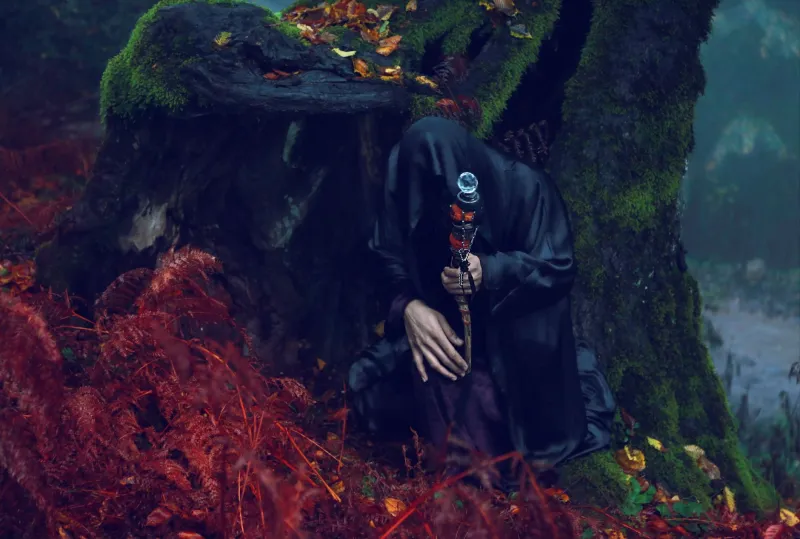
Choosing the Shadow Over the Spotlight
In virtually every major online RPG — whether you're talking classic MMOs, modern fantasy titles, or browser-based adventure games — the support role is the one players are most likely to avoid at the start and most likely to respect by the end. Buffers, enchanters, healers, utility specialists: these are the classes that don't make for great montage clips. You're not going to see a spreadsheet of buff uptime go viral on social media.
But spend enough time in any serious gaming community and a pattern starts to emerge. The players who've been around the longest, who know the game's systems more deeply than anyone else, who have the most stable friend groups and the most consistent playtime — they're almost always support mains.
Jamie, a 34-year-old player from Ohio who has been running an enchanter-style character in various online RPGs for over a decade, put it plainly: "I tried being a damage dealer for about three months when I first started. It was fine. But I felt like I was just pressing buttons and watching numbers. When I switched to support, suddenly I was actually playing the game. I had to know everything about everything."
That's the thing about support roles that most people miss. Playing them well doesn't just require knowing your own kit — it requires knowing everyone else's too.
The Deepest Game Knowledge on the Server
A skilled damage dealer needs to master their rotation, their cooldowns, and their positioning. That's genuinely difficult, and good DPS players earn every bit of their reputation. But a skilled support player has to internalize all of that and layer their own toolkit on top of it.
To land a well-timed damage amplification buff, you need to know when the DPS player is about to hit their burst window. To cleanse the right debuff at the right moment, you need to understand the boss's ability timeline better than most tanks do. To keep a chaotic raid alive through an unexpected mechanic, you have to be reading six different things simultaneously while your own health bar is in freefall.
Marcus, a guild officer from Texas who has led progression raids across multiple games, described his best support players as "the ones who scare me the most in a good way. They know things about encounters that I didn't even know I needed to know. When something goes wrong, they've already adjusted before I've even called it out."
This depth of knowledge is exactly why support mains tend to become the unofficial historians and strategists of their communities. They're the ones writing the guides, running the wikis, and fielding questions from newer players at 2 a.m. on a Tuesday. They're invested in the game's ecosystem in a way that goes beyond their own character's progression.
The Loyalty Factor
Here's something that doesn't get discussed enough: support players build communities the way nobody else does.
When you play a support role, your success is entirely tied to other people's success. There's no version of being a great buffer where you're succeeding and your teammates are failing. The role is fundamentally collaborative, and that shapes the kind of player you become — and the kind of relationships you form.
Asha, a longtime player from the Pacific Northwest who has mained support classes across several fantasy MMOs, described her in-game friendships as "the most genuine ones I've ever had in gaming. When you spend hours keeping someone alive, you learn how they think, how they react under pressure, what makes them tilt. And they learn the same about you. It's different from just grouping up to clear content."
This loyalty runs deep enough that many support mains stay committed to their guilds and servers long after their DPS counterparts have moved on to the next big title. They're not just attached to the game — they're attached to the specific people they've built those invisible bonds with over hundreds of hours of shared encounters.
Why "Invisible" Is Actually a Power Move
Here's a reframe worth sitting with: in a game full of players competing for recognition, the support main has opted out of that competition entirely — and in doing so, they've often ended up with something more durable than fame.
When a high-profile damage dealer carries a raid, everyone knows it. They get the praise, the screenshots, the guild chat shoutouts. But they also get the scrutiny. One bad performance and the narrative shifts fast.
The support player exists in a different economy. Their failures are loud — a missed heal, a dropped buff, a poorly timed resurrection — but their successes are structural. They're woven into the fabric of a successful run rather than standing on top of it. That means they rarely get blamed for wins they didn't contribute to, and their genuine contributions become something their closest teammates understand on a level that goes deeper than leaderboard rankings.
Derek, a player from Georgia who switched to a buffer build after years of playing tank, said it best: "I used to want everyone to see what I was doing. Now I'm more interested in whether we actually won. There's something weirdly freeing about not needing the credit."
The Long Game
If you look at the players with the longest active playtimes on any given server, support mains show up disproportionately often. Part of that is community — they have more reasons to log in because their presence is always needed. Part of it is intellectual investment — there's always another mechanic to understand, another synergy to optimize, another player to help get better.
But part of it is something harder to name. Something that has to do with finding meaning in the role itself rather than in the reward for playing it.
In a genre built on the fantasy of becoming a legend, the support main has figured out a quieter truth: that the most powerful thing you can do in any game — any team — is make everyone around you better. The shadow doesn't need to be seen to be real. And in the right light, it turns out the shadow was holding everything together all along.
So the next time your raid clears that brutal encounter on the last attempt, take a second before the celebration kicks in. Find the support player in your party. They probably didn't say much. They probably didn't ask for anything.
Thank them anyway. They already know what they did.