The Quiet Majority: In Defense of the MMO Players You Never Hear From

Open up global chat in almost any major MMORPG on a Tuesday evening and you'll encounter a pretty consistent cast of characters. The guy debating patch changes with the passion of a Senate hearing. The person recruiting for a hardcore raid team with requirements that read like a job listing. The ongoing argument about whether the current meta is ruined, balanced, or secretly perfect. A few people selling crafting materials. Someone being weird.
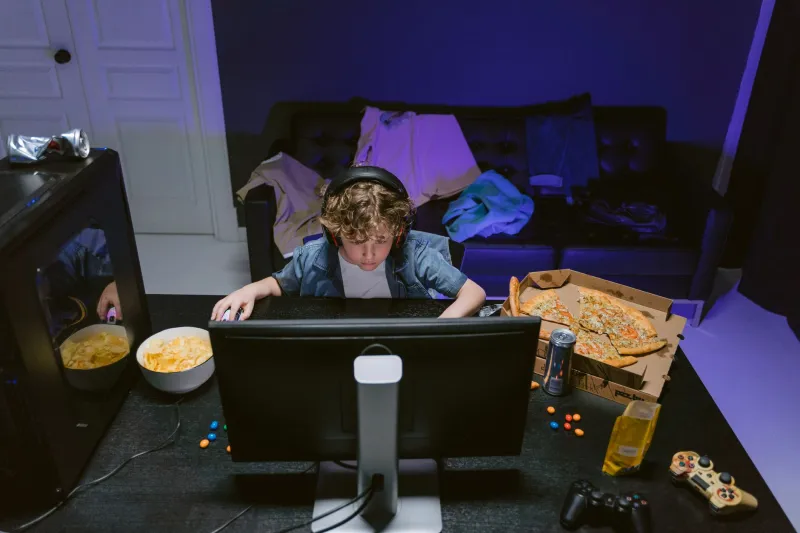
What you won't encounter — by definition — is the massive, mostly invisible portion of the player base that logged on quietly, ran a few quests, maybe did some crafting, and logged off without saying a word to anyone.
These players don't post on the forums. They don't submit feedback tickets. They don't show up in the developer's community spotlight or the guild's Discord server. But they exist in enormous numbers, and the way the gaming industry consistently forgets about them is one of the more consequential blind spots in online RPG design.
The Loudest Voice Problem
Here's a dynamic that plays out across basically every online community, not just gaming: the people most likely to vocalize opinions are the people with the strongest opinions. This sounds obvious, but the downstream effects are significant.
Developer feedback forums, Reddit communities, and official Discord servers are populated almost entirely by players who feel strongly enough about something to say something. That's a self-selected group — and it skews heavily toward high-investment, high-engagement players who interact with the game at an intensity that most of the player base doesn't share.
When a game's most vocal community insists that endgame raiding needs to be harder, that casual-friendly features are "ruining the experience," or that the game is dying because of some patch change, developers often respond — because feedback is feedback and engagement is engagement. What they're missing is the enormous silent audience that logged on, had a fine time doing low-stakes content, and never felt the need to post about it.
The absence of a complaint is not the same as the absence of a preference. The quiet players have preferences. They're just not in the habit of broadcasting them.
Who These Players Actually Are
The "casual player" label gets used dismissively in competitive gaming communities, but it covers an enormous and genuinely diverse range of people.
Some are parents who get ninety minutes of gaming time after the kids are in bed. Some are people using the game as a social space — logging on to hang out in a familiar virtual world with a small group of friends rather than to push progression. Some are players who've been around for years but simply prefer exploration, crafting, or lore-hunting to raid optimization. Some are people managing chronic illness, high-stress jobs, or mental health challenges who need their gaming time to be low-pressure by necessity.
None of these players are less valid than the min-maxer who's been running the same dungeon for six months chasing a perfect gear roll. But in community conversations, they're essentially invisible — because community conversations happen in spaces they don't frequent.
This creates a feedback loop where the game's public identity gets shaped almost entirely by its most intense users, even when those users represent a fraction of the actual player base.
The Economic Reality Nobody Talks About
Here's the part that should make developers pay closer attention: in most subscription-based and free-to-play MMORPGs, casual players are financial bedrock.
Hardcore players are vocal, visible, and often generate enormous amounts of community content — guides, streams, forum posts, theorycrafting. That's genuinely valuable. But they're also more likely to churn when content runs dry, to exploit systems in ways that destabilize in-game economies, and to quit loudly and publicly when something doesn't suit them.
Casual players, by contrast, tend to stick around. They're not racing through content, so they don't hit walls as fast. They're often there for social reasons as much as gameplay reasons, which means their retention is tied to the community rather than the content cadence. A casual player who's been in the same guild for three years isn't leaving because the new raid tier is too easy.
The irony is that the players with the least community voice are often the ones most responsible for keeping the lights on.
What Healthy Actually Looks Like
There's a temptation to read "most of your guild never talks in chat" as a symptom of a dying community. Low engagement, low morale, people just going through the motions before they quit.
But that reading misses something important. Plenty of the healthiest, longest-running guild communities are built around a small active core and a large quiet periphery that engages on its own terms. The quiet members show up for the events they care about, contribute when it matters, and don't need to be the center of attention the rest of the time.
That's not disengagement. That's a functional relationship with a game — one that doesn't demand more than the player wants to give. And honestly, compared to the burnout patterns you see in hyper-engaged competitive players, it looks pretty sustainable.
The shift happening in some of the more thoughtful corners of online RPG design — toward flexible progression, optional social features, content that scales to different time commitments — is partly a recognition that the silent majority deserves to be designed for, not just monetized.
Giving the Quiet Players Their Due
This isn't an argument that hardcore players don't matter or that competitive content should disappear. It's an argument for proportion. For recognizing that the person who shows up in global chat with a seventeen-point manifesto about balance changes does not represent the median player experience.
The median player is someone who logs on a few times a week, does the content they enjoy, talks to a small circle of people they've come to know, and goes about their life without needing the game to validate them as a community contributor.
They're not the loudest voice in the room. But they're the room.
And maybe it's time the conversation started reflecting that.