Shadow Speaks: How Light and Dark Design in Online RPGs Secretly Controls the Way You Play
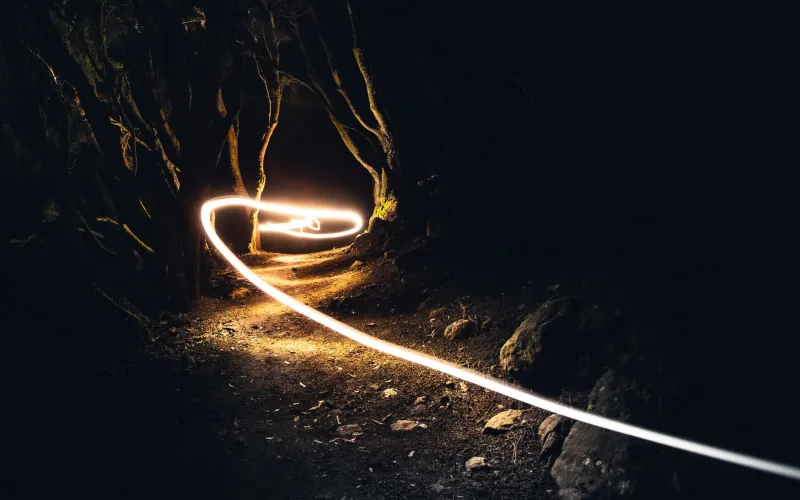
You've felt it before. You're moving through a forest zone, confident, maybe a little overleveled, and then the trees close in. The ambient light drops. Your character's footsteps sound different. Suddenly you're checking your minimap every three seconds and hovering over your health potion like it's a life raft. Nothing in the game told you to be afraid. The darkness did that for free.
This is one of the most underappreciated design tools in the online RPG toolkit: the deliberate, strategic use of light and shadow not just to make a game look cinematic, but to actively shape how players think, move, and make decisions. At Bright Shadow Online, it's kind of our whole thing — and the more you understand how this works, the more you'll notice it everywhere.
The Psychology Behind the Pixels
Human brains are wired to treat darkness as a threat signal. It goes back way further than video games — our ancestors needed to know what was lurking beyond the firelight. Game designers didn't invent this anxiety; they just learned to weaponize it.
In online RPGs, light functions as a trust signal. Bright, warm-toned areas — think sun-drenched starting villages, candlelit inns, or glowing quest hubs — subconsciously communicate safety. Players slow down. They read lore tablets. They chat in general. The environment is telling them: you're okay here.
Flip the palette to cool blues, deep purples, or near-total black, and something shifts. Players tighten up. Party members stop wandering. Communication in voice chat gets clipped and tactical. The visual design is doing crowd control without spending a single gameplay mechanic to do it.
Researchers studying player behavior in open-world games have noted that players consistently spend more time in well-lit zones, explore more thoroughly, and are more likely to read optional content. In darker zones, exploration becomes goal-oriented and cautious. Designers know this. They use it constantly.
Iconic Examples That Got It Right
Few online games have leveraged this contrast as effectively as Final Fantasy XIV. The difference between the cheerful golden light of Limsa Lominsa's upper decks and the oppressive shadow-drenched corridors of certain alliance raids isn't accidental — it's architectural storytelling. When you descend into a dungeon and the ambient lighting goes cold, FFXIV is telling you to put the snacks down and focus.
 Photo: Limsa Lominsa, via www.getlenoxed.com
World of Warcraft built an entire expansion's emotional identity around this principle. The Shadowlands — whatever your feelings on the content — committed hard to its visual language. The brooding violet-black of the Maw versus the ethereal glow of Bastion weren't just aesthetic choices. They were psychological zone-setting. Players reported feeling genuinely uncomfortable lingering in the Maw, even when they were powerful enough to do so easily. That discomfort was the design working exactly as intended.
Older players might remember how EverQuest used darkness as a genuine mechanical threat. Without a light source, you were functionally blind in certain dungeons. The community developed entire social rituals around light — who was carrying a torch, who had the Night Vision spell, who was about to walk into a wall. Darkness created dependency, and dependency created community.
The Modern Push: Dynamic Light as Gameplay Layer
Contemporary online RPGs are taking this further by making light and shadow interactive rather than static. Some games now feature lighting systems where environmental brightness affects enemy behavior — nocturnal creatures become more aggressive after the in-game sun sets, or certain mechanics only trigger in specific light conditions.
This transforms lighting from background atmosphere into something players have to actually manage. It's a meaningful evolution. When darkness isn't just a mood but a variable you can manipulate — lighting a brazier to clear a shadow-spawn zone, or deliberately dousing torches to avoid detection — the visual design becomes part of the strategy layer.
Some newer titles are also experimenting with player-generated light as a social signal. In games with robust player housing or guild hall systems, the way a space is lit communicates personality and intent. A guild hall bathed in harsh red light reads differently than one decorated with soft lanterns, even if the stats are identical. Players respond to this intuitively, because they've been trained by the rest of the game to read light as meaning.
Contrast as Narrative Punctuation
Beyond zone design, the best online RPGs use the shift from bright to dark — or dark to bright — as a storytelling beat. Think about the moment in a long dungeon run when you finally push through the final corridor and the boss arena opens up. Often, there's a deliberate lighting shift: the cramped, dim passage gives way to something more dramatic. It could be a cavernous space with a single spotlight on the encounter, or an outdoor finale where the sky suddenly matters.
That contrast is punctuation. It tells your brain: this is the moment. Your heart rate ticks up a little. You double-check your buffs. You're ready. The designers didn't need a cutscene or a dramatic voiceover. They just changed the lighting, and your nervous system did the rest.
For guild leaders and raid organizers, understanding this can actually be useful. When you're scouting a new instance or prepping your party for a first clear, pay attention to where the light changes. Those transitions almost always mark a shift in encounter design, pacing, or difficulty. The environment is giving you a roadmap if you know how to read it.
Why This Matters to You as a Player
Knowing that you're being guided by visual design doesn't make it less effective — but it does make you a smarter, more intentional player. You can start to recognize when darkness is being used to create artificial difficulty versus when it's genuinely serving the story. You can appreciate the craft behind a well-lit boss arena or a terrifying pitch-black corridor.
More importantly, you can lean into it. If the game is telling you something feels dangerous, trust that. If an area looks warm and welcoming, take a breath and explore it fully before pushing on. The designers put those signals there for a reason.
At Bright Shadow Online, we believe the best gaming experiences happen when players and designers are in conversation — even when that conversation is happening entirely through the language of light. So next time a dungeon feels ominous before a single enemy appears, tip your hat to whoever made that call. They knew exactly what they were doing.