Crushed, Betrayed, Defeated: How Losing Everything Turned These RPG Players Into Legends
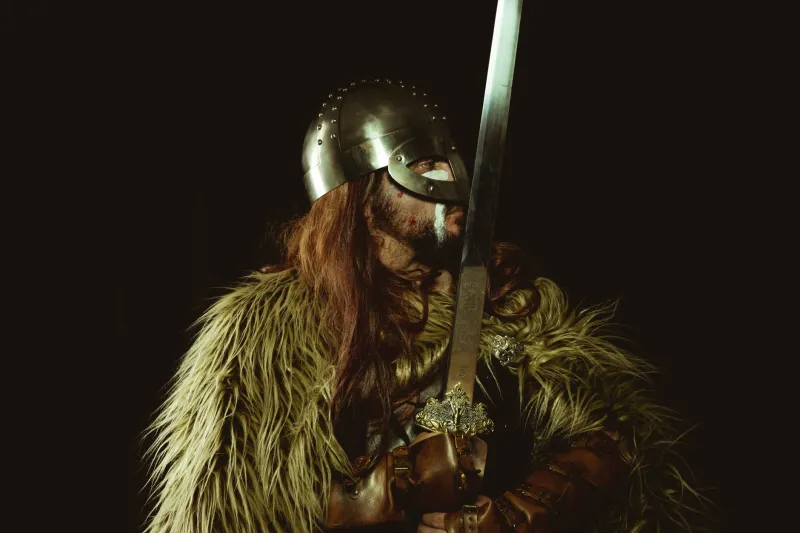
Nobody puts a screenshot of their worst defeat in their highlight reel — but maybe they should. The most defining moments in online RPGs don't always come wrapped in victory fanfares and loot drops. Sometimes the story that changes everything starts the second the screen goes dark and your character hits the ground.
We've all heard the victory stories. The guild that downed the world-first raid boss after forty-seven attempts. The solo player who climbed to the top of the leaderboard through sheer stubbornness. Those tales travel fast. But dig a little deeper into any veteran RPG community, and you'll find something more interesting underneath — a collection of losses so brutal, so unexpected, and so weirdly meaningful that players still talk about them years later like old war wounds they're quietly proud of.
The question isn't why we fail. The question is why some failures stick with us in ways victories never quite do.
The Science of the Story-Defining Loss
Game designers have known for a long time that tension requires risk, and risk requires the genuine possibility of losing. But what they don't always talk about openly is how unscripted failure — the kind that catches you completely off guard — does something to a player's relationship with a game that no scripted cutscene ever could.
When you lose in a way you didn't see coming, your brain doesn't just file it away as a gameplay stat. It treats it like a real memory. Researchers studying narrative transportation — the psychological phenomenon where people become absorbed in a story — have found that unexpected negative outcomes create stronger emotional imprints than predictable positive ones. In plain English: getting blindsided hurts more, but it also means more.
For RPG players, that translates directly into the moments they can't stop thinking about.
"I had been playing the same character for almost two years," said Marcus, a 29-year-old player from outside Atlanta who asked that his last name not be used. "Full endgame gear, legendary weapon, reputation built across three servers. Then one afternoon a player I'd been running content with for months just — wiped us all out. Turned on the whole party in a PvP zone. I lost everything I'd been carrying."
He paused. "That was four years ago. I still think about it more than any raid I've ever cleared."
Betrayal Hits Different
Of all the flavors of in-game defeat, betrayal by a trusted ally seems to leave the deepest mark. It's not hard to understand why. When a dungeon boss wrecks your party, you shake your fist at the game designers. When a friend does it, you shake your fist at the entire concept of trust — and then you start rebuilding your whole approach to the game from scratch.
Jordan, a player from the Pacific Northwest who has been active in online RPG communities since the early 2000s, describes a guild coup that reshaped her entire playstyle. "We had a co-leader who had been with us since the beginning. One night while most of us were offline, he transferred the guild bank, kicked half the roster, and restarted under a new name with a competing group. We lost months of resources."
She laughed — the kind of laugh that's mostly processed pain. "I was devastated at the time. But honestly? It made me a better guild leader. I learned how to structure permissions, how to read people, how to build a community that doesn't collapse the second one person decides to blow it up. That betrayal taught me more than any guide ever could."
This is the counterintuitive engine at the heart of great RPG storytelling: failure teaches in ways success simply doesn't. Victory confirms what you already knew worked. Defeat forces you to examine everything you assumed.
The Permanent Loss Problem — And Why It's Actually a Gift
Games with permadeath mechanics or permanent consequence systems understand this on a design level. When your character's death actually means something — when there's no respawn, no reload, no do-over — players invest differently. They move more carefully, form alliances more thoughtfully, and feel every close call with a kind of electricity that safer games can't replicate.
But even in games without formal permadeath, players create their own version of it. A character you've spent hundreds of hours building carries weight that a fresh reroll never will. Losing that character — whether through a catastrophic wipe, a corrupted save, or a guild collapse that makes continuing feel pointless — functions as a kind of unofficial permadeath. And the players who come back from it almost always come back different.
"I deleted my main voluntarily after a really bad falling out with my guild," admitted Tyler, a 34-year-old from Chicago who plays across multiple platforms. "It sounds dramatic, but I needed the clean break. Starting over with nothing felt like the only honest way to move forward. And weirdly, that new character became the one I'm most attached to. Because I built her knowing exactly what I didn't want to repeat."
Defeat as Character Development
Here's where the RPG experience starts to blur the line between game and story in a way that's genuinely fascinating. In traditional narrative — novels, films, screenplays — a protagonist who never faces real setback is a protagonist nobody cares about. The loss is the crucible. It's where the character becomes someone worth following.
Online RPG players are, without fully realizing it, running that same narrative engine on themselves.
Every crushing defeat is a chapter. Every betrayal is a plot twist. Every rebuild from zero is an origin story. The players who accumulate the richest histories in these games aren't the ones with the cleanest win records — they're the ones who kept showing up after the worst nights, who looked at a decimated roster or an empty inventory and decided the story wasn't over yet.
That's where the bright shadow lives, if you want to get a little philosophical about it. Not in the clean victories or the flawless runs. In the murky space between what you were before the loss and who you became after it.
What the Best Players Know That Beginners Don't
Ask any long-tenured RPG veteran what separates the players who build lasting reputations from the ones who burn out and disappear, and some version of the same answer keeps coming up: the ability to absorb a loss and keep moving.
Not to shrug it off. Not to pretend it didn't hurt. But to sit with it, learn what it's actually saying, and come back to the game with something new in your toolkit.
Beginners treat defeat as an interruption to the game. Veterans understand it is the game — maybe the most important part of it.
So the next time the raid wipes, the guild implodes, or someone you trusted turns the blade around — don't just reload and rush back in. Give it a minute. Ask yourself what just happened and why. Because somewhere in that mess is the story you'll still be telling ten years from now.
And stories like that don't come from winning.