Past the Edge of the Map: What Keeps Veteran RPG Players Hungry When They've Seen Everything

Past the Edge of the Map: What Keeps Veteran RPG Players Hungry When They've Seen Everything
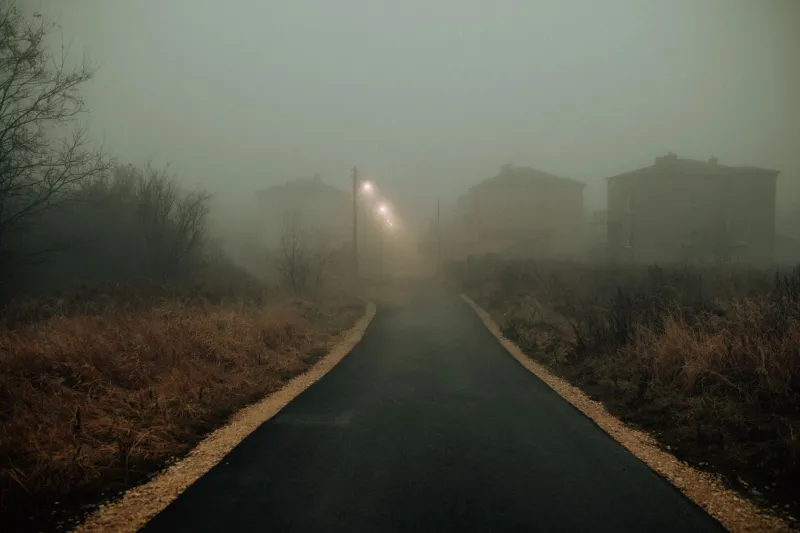
There's a specific kind of silence that settles over a veteran RPG player. Not the comfortable quiet of someone who's earned their rest — more like the uneasy stillness of someone standing at the far edge of a world they once found infinite, staring at the fog where new territory used to be. Every dungeon cleared. Every faction reputation maxed. Every hidden chest looted months ago.
Most games eventually hit that wall. The best ones never let you find it.
So what's the difference? What separates an online RPG that breathes and evolves from one that just loads the same familiar textures until you quietly uninstall it? We spent time talking to long-haul players, digging through community forums, and thinking hard about design philosophy to find out.
The Illusion of Completion Is the Enemy
Here's the uncomfortable truth: no game world is actually infinite. Developers work with finite budgets, finite time, and finite creative bandwidth. The trick isn't building a world without edges — it's building one where the edges feel perpetually out of reach.
Games that fail veteran players almost always make the same mistake: they let you feel finished. Completion meters hit 100%. Achievement lists go dark. The main story wraps with a tidy bow and a credits roll. That sense of closure, satisfying as it is in the short term, is the kiss of death for long-term engagement.
The RPGs that dodge this trap are intentional about ambiguity. They leave questions unanswered. They plant lore fragments that don't resolve cleanly. They design NPC dialogue that hints at histories you'll never fully excavate. The world doesn't end — it just gets quieter in directions you haven't listened yet.
Procedural Mystery vs. Handcrafted Depth
One of the most common solutions developers reach for is procedural generation — randomized dungeons, rotating world events, algorithmically assembled loot tables. And it works, up to a point. There's real value in a dungeon that reshuffles itself every time you enter, or a seasonal event that drops content nobody's seen before.
But seasoned players are quick to sniff out the seams. Procedural systems, when they're the only trick in the box, start feeling hollow fast. You realize you're not discovering something — you're just watching a shuffle. The mystery evaporates once you understand the rules behind the curtain.
The games that truly hold veteran attention tend to pair procedural systems with deep, handcrafted lore architecture underneath. Think of it like a jazz improvisation built on a complex chord structure — the surface is always different, but the depth beneath gives it meaning. When a randomly generated dungeon contains a fragment of a storyline you've been piecing together for sixty hours, suddenly the randomness feels purposeful.
The Community as Content
Here's something game designers don't always get full credit for: in the best online RPGs, the player base is part of the content. Veteran players don't just consume the world — they reshape it.
Guilds develop their own internal lore. Server-wide events spin out of player decisions. Economies shift based on what high-level crafters decide to prioritize. A game that gives its community genuine agency — not just cosmetic choices, but decisions that ripple outward — creates a living layer that no developer team could script alone.
Some of the most compelling long-term RPG experiences in recent memory weren't driven by patch updates or new zones. They were driven by player-organized tournaments, emergent political drama between guilds, community-built theory-crafting rabbit holes that turned obscure NPC dialogue into six-month mysteries. The game became a stage; the players wrote the ongoing story.
If you're a veteran player feeling the itch of stagnation, this is worth remembering: sometimes the content you're looking for isn't in the game files. It's in the Discord server you haven't joined yet.
Lore as a Labyrinth
Let's talk about the players who never really run out of game — the lore hunters. These are the folks who've cleared every raid and still spend their evenings cross-referencing item descriptions with decade-old patch notes, looking for the thread that ties everything together.
The best online RPGs treat their lore like an archaeological site. Surface-level players get a coherent story. Dig deeper and you find contradictions, buried histories, references to events that happened before the game's timeline even begins. Dig deeper still and you find things the developers may have planted without ever intending to explain.
This kind of layered world-building doesn't happen by accident. It requires writers who think beyond the immediate quest and designers who understand that some mysteries are more valuable unsolved. A lore system that rewards obsessive attention without ever fully surrendering its secrets is one of the most powerful retention tools an RPG can have — and the players who fall into those rabbit holes rarely come out complaining about boredom.
The Veteran's Own Evolution
Something that doesn't get discussed enough: sometimes the game hasn't changed — you have. And that's not a bad thing.
Veteran players who stay engaged long-term often shift how they play rather than chasing the same loop with fresh eyes. The min-maxer becomes a roleplay enthusiast. The solo grinder discovers the satisfaction of mentoring new players. The speedrunner starts deliberately slowing down, exploring corners they blew past at full sprint during their first hundred hours.
The games that accommodate this evolution — that don't force every player into the same endgame funnel — tend to hold their audiences longest. When a game respects that a five-year player might want something completely different from a five-week player, and builds systems that serve both, it's investing in longevity in the smartest possible way.
What the Best RPGs Get Right
Pull it all together and a pattern emerges. The online RPGs that keep veteran players genuinely engaged share a few common traits: they resist the closure impulse, they layer handcrafted depth beneath dynamic systems, they empower their communities to generate meaning, and they build lore architectures deep enough to reward the obsessive without ever fully satisfying them.
Most importantly, they understand that the feeling of the unknown — that specific pull toward the horizon — is more valuable than any piece of content they could drop in a patch. A world that makes you feel like there's always something just past where you've been is a world worth staying in.
The map, in the best games, never really runs out. It just gets harder to read.
And honestly? That's exactly how it should be.