The Last One Who Remembers: Living as a Walking Archive in a Changing Game

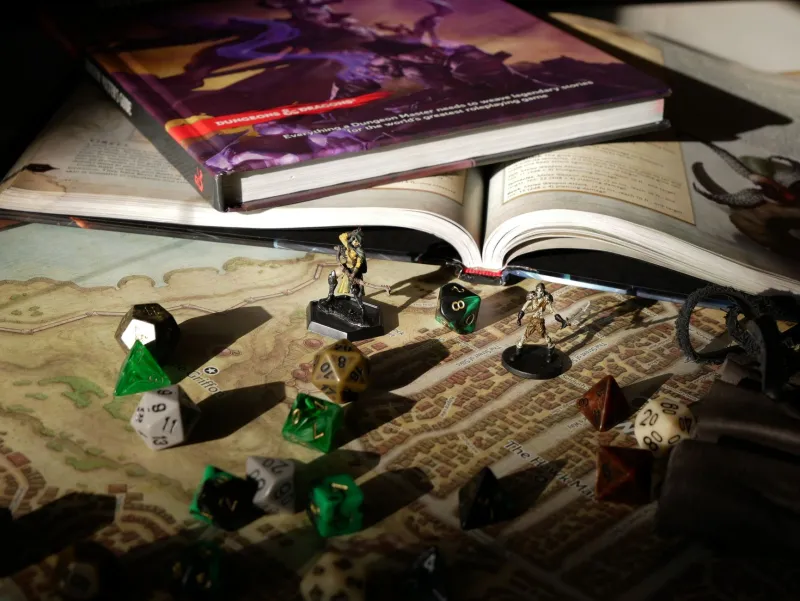
Photo: Gene Sweeney Jr., Public domain, via Wikimedia Commons
Somewhere on almost every long-running RPG server, there's a player who pauses in the middle of a busy zone and says something that stops newcomers cold: "There used to be a dungeon right here. Before the patch. You could see the entrance from this exact spot."
Nobody else in the party was there. Nobody else can verify it. But the way they say it — with the quiet certainty of someone describing a childhood home — makes it feel true in a way that goes beyond patch notes and wiki entries.
These players are the living archives. And the role they carry is stranger and heavier than most people realize.
What Gets Erased
Online RPGs change constantly. It's part of what makes them alive. Developers patch mechanics, retire zones, retcon lore, rename NPCs, and quietly remove content that didn't work or didn't fit the direction the game was heading. For most players, these changes are just updates — the game today is the game that exists. History is irrelevant.
But for the players who were present for what came before, every update is also a kind of erasure.
"There was a zone in one of the games I played for years," says Elise, a 38-year-old from Denver who's been playing online RPGs since the late 1990s. "It got removed in a major content overhaul. No warning, no acknowledgment. Just gone. I went to where it used to be and there was just a different biome there. New players had no idea. They'd never even heard of it."
Elise spent several weeks writing up everything she could remember about the zone — the layout, the enemy types, the obscure quest line that had been tied to it, the lore implications that had quietly been abandoned when it was deleted. She posted it on the game's fan forum. The post got a handful of upvotes from other veterans and then sank into the archive.
"It mattered to me that it existed somewhere in writing," she says. "Even if nobody ever read it."
The Mythology Keeper
In physical communities, oral history is a recognized and respected practice. Cultures have always designated people to carry the stories that don't fit in official records — the elders, the storytellers, the keepers of what actually happened versus what the written version says.
Online gaming communities have their own version of this, and it's worth taking seriously.
The long-term players who remember deleted content, retired mechanics, and fallen servers aren't just nostalgic. They're performing a genuine archival function. They hold context that shapes how a community understands itself — why certain traditions exist, where specific in-jokes originated, why the community has complicated feelings about a particular developer decision.
"I'm the person people come to when they want to know why our server does a specific thing during certain events," says Ray, a 42-year-old from Minneapolis who's been on the same RPG server for going on nine years. "There's this whole ritual that new players think is just a fun tradition, but it actually started as a response to something that happened years ago — a server event that went badly and became a kind of inside joke. I'm one of maybe three people left who were there for the original incident."
Without Ray and those two other players, the ritual continues but the meaning behind it disappears. The community practices a tradition it no longer fully understands.
The Weight of Being the Only Witness
Carrying this kind of knowledge isn't always comfortable.
There's a specific loneliness that comes with remembering things nobody else does. When you mention a mechanic that was changed years ago, you sometimes get blank stares or polite skepticism. When you talk about a player who was once a major figure on the server but has long since disappeared, you're describing someone who, to most of the current community, simply doesn't exist.
"I brought up an old guild once — a really famous one on our server, back in the day — and people thought I was making it up," says Keisha, a 33-year-old from Atlanta. "Like, this guild had done things that shaped the whole server's culture. The way we approach certain content is directly because of decisions they made. But there's no record of them anymore. Their guild page was deleted. Their members moved on. I'm just some person claiming a ghost guild was important."
This credibility problem is one of the stranger aspects of the living archive role. Institutional memory in online games has almost no official support structure. Developers rarely maintain accessible histories of how their games have changed. Wikis go unmaintained. Forum posts get deleted in platform migrations. The weight of remembering falls entirely on individual players, with no mechanism to validate or preserve what they carry.
What Happens When the Archive Walks Away
The stakes of this become clearer when you consider what happens when these players finally leave.
Every time a long-term veteran logs out for the last time, a portion of a game's history goes with them. Not the documented history — the patch notes and the official lore — but the living history. The stories of what the game actually felt like at specific moments. The context behind community customs. The names and personalities of players who shaped a server's culture before the current generation arrived.
"I've thought about quitting a few times," Elise admits. "And every time I do, I feel this weird obligation. Like there's stuff I know that nobody else does, and if I leave, it just disappears. That's not a healthy reason to keep playing a game, but it's a real feeling."
This sense of obligation is worth examining. At its best, it drives players to document, to share, to mentor newcomers with the full weight of context behind them. At its worst, it can trap players in games they've outgrown, held hostage by a responsibility they never asked for.
How to Honor What's Been Lost
If you're a newer player and you have a veteran in your community who occasionally says things like "back before the update" or "there used to be a quest here" — listen to them. Not just out of politeness, but because what they're offering is genuinely rare.
And if you're one of the living archives yourself, a few practical thoughts:
Write it down. Even informal posts on community forums, Discord servers, or fan sites create a record that outlasts any single player's memory. Your recollections, however fragmentary, are primary sources.
Find the others. The players who share your vintage are scattered across servers and sometimes across games. Connecting with them multiplies your collective memory and distributes the archival load.
Let yourself be found. New players who care about history exist in every community. They're often the ones asking the questions that everyone else waves off. Those are your successors. Invest in them.
Know it's okay to let go. The history doesn't have to live only in you. Once it's shared, once it's written, you've done your part. The shadow of what came before doesn't have to follow you forever.
The game changes. The servers evolve. Players come and go like seasons. But somewhere in the space between what's officially documented and what's genuinely remembered, the real story of any online world lives — carried forward, quietly and faithfully, by the ones who were there.