Owls of the Server: Inside America's Late-Night RPG Obsession
Owls of the Server: Inside America's Late-Night RPG Obsession
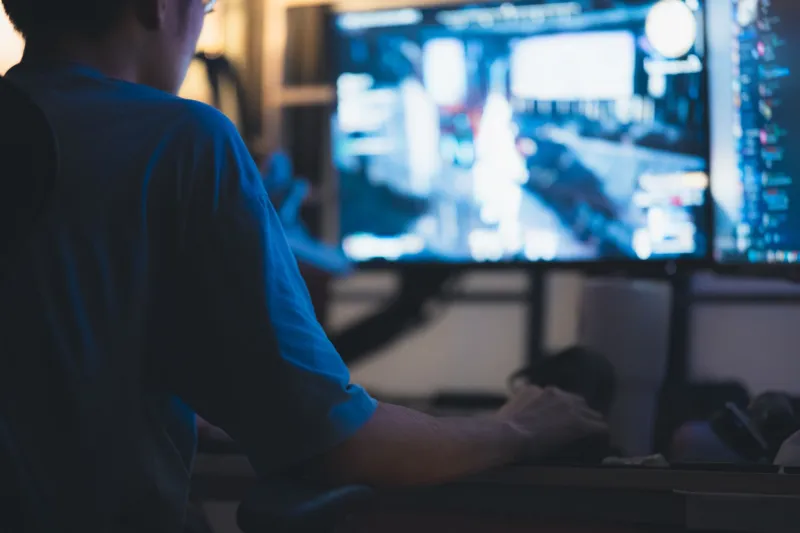
There's a moment — usually somewhere around 1:47 a.m. — when the chat slows down, the auction house empties out, and the main quest zones feel almost abandoned. For a certain kind of American RPG player, that moment isn't a signal to log off. It's an invitation.
Call them the night owls, the shadow runners, the graveyard-shift guild members. Whatever the label, they're a real and surprisingly passionate segment of the online RPG community. And they'll tell you, without a hint of irony, that the best gaming of their lives has happened when the rest of the country was asleep.
The Numbers Behind the Night
Platform activity data from several major online RPGs consistently shows a notable dip in US player counts between roughly 11 p.m. and 2 a.m. — and then a curious secondary surge that stretches toward dawn. This isn't just insomniacs randomly clicking around. Forum posts, Discord logs, and Reddit threads paint a picture of intentional, committed play sessions that players specifically schedule for the dead hours.
One player on a popular fantasy MMO forum described it plainly: "I work a nine-to-five, I've got kids, I've got obligations. But from midnight to three? That's mine. The game feels completely different. It's like the whole world belongs to me and maybe forty other weirdos."
That sense of ownership over the server is a recurring theme. When the prime-time crowd logs off, the social texture of the game changes. Trade chat loses its noise. PvP zones thin out. And the players who remain tend to self-select into a specific type — dedicated, a little intense, and oddly willing to open up.
Why the Dark Hours Hit Different
Psychologists who study gaming behavior have long noted that late-night play sessions carry a distinct emotional quality. Dr. Rachel Ames, a behavioral researcher who has written about digital community formation, describes it as a kind of "campfire effect." Strip away the crowd, lower the ambient stimulation, and people tend to bond faster and more authentically.
 Photo: Dr. Rachel Ames, via filamu.org
"There's real psychology behind this," she explained in a 2023 podcast on gaming culture. "Late-night environments — whether physical or digital — lower our social guards. We're tired, we're past the performative part of our day, and we're more likely to be genuinely ourselves. Online games just happen to be the campfire a lot of Americans are gathering around."
For RPG players specifically, that authenticity can translate into some genuinely extraordinary moments. Guild members describe marathon dungeon runs that turned into three-hour conversations about real life. Players recount making in-game decisions — risky alliances, dramatic character choices, faction betrayals — that they'd never have attempted during peak hours when guild leadership was watching.
"I tanked a raid at 2 a.m. with seven people I barely knew," one player from Ohio shared in a community thread. "We wiped four times and laughed about it every single time. I've been in that guild for three years now. That night is why."
The Shadow Community Nobody Talks About
Here's the thing developers rarely acknowledge publicly: the late-night player base is functionally a separate community operating inside the same game world. They have their own social norms, their own unspoken rules, and their own economy of reputation.
In some games, the graveyard shift has even developed its own slang and rituals. Certain resource nodes that are fiercely contested during peak hours become cooperative territory at night, with players leaving informal "tips" about spawn timers in zone chat. Some servers have standing traditions — a weekly late-night PvP event that isn't sanctioned by any guild, just organized organically by whoever happens to be online.
Developers, for the most part, haven't built systems that specifically acknowledge this dynamic. Events, sales, and content drops are almost universally timed for peak hours. Seasonal content favors weekend afternoons. The late-night crowd gets the same game as everyone else — they've just learned to find meaning in the margins.
A few studios have started paying closer attention. Some have experimented with rotating event windows to catch different time zones and play schedules. Others have added server-side "quiet hour" bonuses — subtle XP or loot buffs during off-peak windows — though these are rarely marketed as such. It's a quiet acknowledgment of a community that has always operated in the shadows.
What It Says About American Gaming Culture
Zoom out a little, and the late-night RPG phenomenon starts to look like a mirror held up to something bigger. Americans are chronically overworked, chronically under-rested, and increasingly reliant on digital spaces for genuine social connection. The fact that so many of us are carving out the only quiet hours of our day and spending them in fantasy worlds isn't just a quirk of gamer culture. It's a statement about what we need and where we're finding it.
For a lot of players, the RPG isn't an escape from real life so much as a supplement to it — a space where they can be fully present in a way their waking hours rarely allow. The late-night login is, in its own strange way, an act of self-care.
"I know it sounds backward to stay up until three in the morning for my mental health," laughed one player from Texas who logs in nightly after her kids are asleep. "But I come out of those sessions feeling more like myself than I have all day."
The Cost — and the Calculus
None of this is without consequence, of course. Sleep researchers are pretty clear on the effects of chronic late-night screen time, and the gaming community isn't immune to burnout. Some veteran players describe a specific kind of exhaustion that comes not from the game itself but from the impossible arithmetic of squeezing meaningful play into stolen hours.
But the players who've found their groove in the graveyard shift tend to be surprisingly thoughtful about the trade-off. They're not chasing achievement points at 2 a.m. — they're chasing something harder to quantify. Community. Presence. The rare and specific pleasure of a world that, for a few hours, feels like it belongs to them.
The bright shadow of online RPGs has always been this: the game you see advertised and the game people actually live inside are two very different things. Somewhere between midnight and dawn, a version of that game exists that no developer fully designed and no marketing team has ever properly described. It's built out of exhaustion and loyalty and the particular kind of honesty that only surfaces when the world is asleep.
And every night, a few hundred thousand Americans log in to find it.